Monday, 21 May 2012

Karl and Elise Meng's Children


Only three of Karl and Elise Meng’s seven daughters survived to maturity.

Hellene Barbara Meng  (23-06-1867  -  03-08-1869) 

Hellene drowned in a waterhole aged two years and one month on the Maori Reserve, Tuahiwi in 1869.

Elise Mary Meng (02-11-1868   -  05-07-1881)

Elise Mary Meng died at age 12 of pneumonia at Ohoka in 1881.

Mary Meng (21-05-1870  -  27-02-1937)

Mary Meng  was born in Woodend, North Canterbury on 21-05-1870.  She was only nine when her mother passed away and 15 when her father died.  Her step mother went overseas for almost ten months and Mary either went to stay with Peter Schneider by herself, or went to Heinrich Kissel with one of her sisters.  After her step mother came back she continued to live at 30 Antigua Street, Christchurch with her stepmother Sarah Meng and was confirmed at St Michael’s, Christchurch on 21-08-1887.  She was being given music lessons by Miss Bush and there was a piano in the house when her father died, so it is presumed the sisters had a grounding in music. She married Edwin Lord in 05-05-1893 at St Michael's Church in Christchurch by the Rev W. Harper. They settled in Ohoka on the farm once owned by her father Karl Meng.  Mary had inherited the farm along with her two sisters.  Katherina and Emma were eventually paid out by Edwin and Mary.  It looks as if the farm was leased from around 1882 to 1893 by other people before Edwin and Mary leased it.   Mary Lord was the favourite aunt of many of her nieces and nephews.  She was also quite a strict lady.  She enjoyed doing embroidery and passed this on to her two daughters.  She was called “Blue Grandma” by her granddaughter as she wore a lot of blue. See the blog “Ohoka Lords” for more information.

Mary Meng


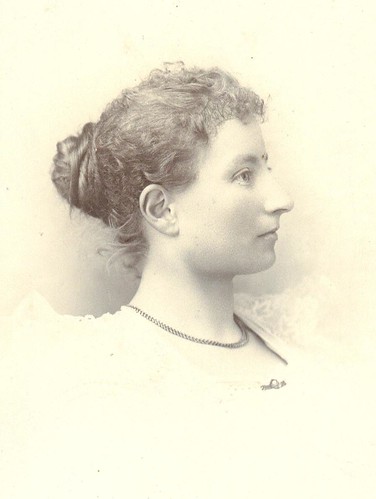
Katherina Meng (23-10-1872  -  1969)

Katherina Meng known as Kate, married William Alexander Fraser on 03-01-1899 in Christchurch and they moved to the Wellington area of the North Island.  They had nine children.

One of Katherina’s daughters said that her mother had mentioned she had an uncle who was an artist and another who was a Lutheran priest, but it was all rather vague. Kate's daughter thought Katherina had Mennonite characteristics.  “She was a very good Christian and rather strict in many things, but she was a wonderful mother, I owe her much.”  William Fraser died in 1945 and Kate in 1969 and are buried in Karori Cemetery, Wellington.

Kate Meng with a bun cropped

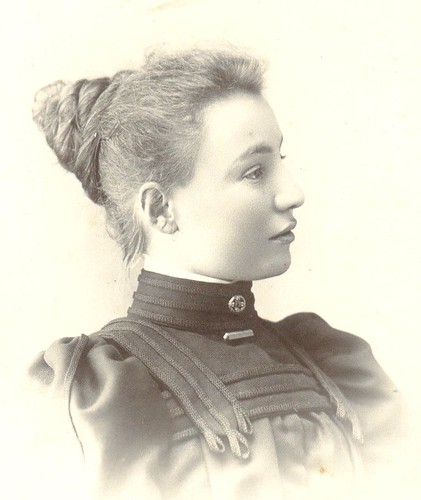
Emma Magdalena Meng (14-09-1875  -  23-09-1931)

Emma Meng married Thomas Henry Dalton on 01-01-1902 in Christchurch and they lived in a house on a hill at Dunedin.  They never had children.  Emma was a gentle lady.  Her niece Dorothy used to visit her in the holidays when she was young.  Emma and Thomas were both of German origin and had a swastika (originally a religious symbol) imprinted and painted on their garage.  This got painted over during the first world war but the swastika outline could still be seen. 

Emma died in 1931 and Thomas in 1943 and they are buried in Bromley cemetery.

Emma Meng with a bun cropped


Lina Amelia Meng (08-10-1877  -  19-03-1878)
Amelia Wihelmina Meng (08-10-1877  -  23-02-1878)

The twins Lina and Amelia didn’t live for very long as Elise had no milk and they were not growing well.  Lina died of inanition, which is a lack of food and water.  There was a “Verdict of Jury” written on Amelia Wihelmina Meng’s death certificate which meant an inquest was done.  An excerpt of the inquest follows: 

Elizabeth Catherine Meng being sworn, saith that I am the mother of the deceased child Amelia Wilhelmina Meng.  She was four months old on the eighth of the present month.  She has been troubled with a cough this a few days before she died.  She took her feed of milk pretty well but frequently vomited her food still a day or two before she died.  On Saturday the twenty third of February she was weak from throwing up so much in the morning but I did not think it was serious as she was suffering from teething.  My husband went to Christchurch and I had nobody to send for a Doctor when she was taken worse in the afternoon.  She got weaker and died in my arms about half past three o’clock.  The vomiting had ceased.  She had had nothing but milk and water which I gave in a teaspoon as she would not take the bottle.  She has never had the breast as I had no milk.  She never grew so well as my other Children living ? very weakly.  My husband brought a double Perambulator for the children from ChCh. on Saturday.  Deceased was one of twin children.

William Henry Ovenden being sworth saith I am a duly qualified medical practitioner at Kaiapoi.  I attended at the birth of the deceased who was a strong healthy child. . .  The body was very thin, showing a want of nutrition.  . . .   The appearance of the deceased viewed thus every proper attention had been paid to it.  I attribute the cause of Death to hence been from “Want of Vitality”  I have no doubt that the child died from natural causes - viz General Atrophy.

"Willowgrove" Ohoka


"Willowgrove" was the name given to my ancestors' farmhouse in Ohoka.  It appears that my ancestor Karl Meng bought the land from the Crown in 1873 so this indicates that the land would probably have been bare when he took possession.  Karl probably had the farmhouse built around 1873.

Karl probably lived in the house with his family for close to ten years when he moved to 30 Antigua Street with his second wife Sarah Winfield Potts (nee Brown).  After Karl died in 1885 the property went to his three daughters. Edwin and Mary Lord took on the property in about 1896 and lived there until 1919 after which the moved to Papanui Road, Christchurch.   

In February 1997 my Mum and I visited the property and talked to tenants in the new 1960s style house who said we were welcome to look around the old farmhouse.   It was in a terrible state.  We were told not to go upstairs as it was rotten and we could have gone through the floorboards.  Downstairs there were two bedrooms, a lounge and a dining room and a tiny galley kitchen with cloakroom and pantry at the back.  Upstairs were four bedrooms which were accessed by two sets of stairs facing each other.  A very strange set up but it worked well as when farm labourers stayed they had their own staircase to their bedrooms, separate from Edwin and Mary's two daughters' bedrooms.  There were 8 rooms in total and there used to be a glassed in piece of veranda which was used by Mary as a green house.  In 2012 the property is numbered 625 Mill Road, Ohoka.

Here is a photo of "Willowgrove" in the early 1900s when Edwin and Mary Lord owned it and a photo of it in Feb 1997.  My Great Grandma grew up at "Willowgrove" and always told stories about it with such joy.  She died in April 1997 and a short time after we drove back past the house and it had been bulldozed.


The farmhouse at Ohoka
Ohoka Farmhouse
Map of Ohoka farm land 1897 from Edwin Lord lease grayscale
Willowgrove sketch 2 Willowgrove sketch 1

A Sad Inquest


I ordered an inquest a couple of years ago from Archives New Zealand.  It was written in the very messy hand of the coroner.  I managed to figure out most of the words but one or two words were too hard to read.  This inquest makes me feel very sad, especially since I have children of a similar age.

Inquest into the death of Hellene Barbara Meng dated 4 August 1869

Eliza Meng being sworn, saith that I am the mother of the deceased child Hellena Barbara Meng.  She was two years and one month old.  On Monday afternoon last between three and four o’clock August the second.  I left the deceased outside the house and in about five minutes not hearing her I went out to look for her.  I went to my neighbour Stewart a few chains away.  I found she was not there.  I then went about the paddock.  I then went to the water hole in the paddock about three chains from the house.  I then found the deceased in the water.  She was on the water with the face downwards.  I got her out and took off her clothes and wrapped her in blankets but there was no sign of life.  I sent for my husband and the Revd Mr Stack but Mr Stack said we could do no more and she was dead.  The deceased was in the habit of playing outside the house and I never knew her so near the water hole before.  The hole was about six feet deep.  There were no marks of injury or (unreadable word) on the deceased. 

Signed Elise Meng


David Stewart being sworn, saith that I am a labourer living by the Church Bush.  I am the nearest neighbour to Eliza Meng.  On Monday afternoon last, Eliza Meng came to my home and said her baby was drowned.  I went back with her and saw the deceased on the bed.  She was quite cold and water coming from her nose and mouth and her head wet.  There was no injury to be seen on the baby which was undressed.  The deceased was quite dead.  I do not think any thing could be done.  I think there was no use in sending for any assistance.  The paddock has just been ploughed and there was a furrow leading between the house and the hole along which the deceased had gone. 

Signed David Stuart

That the said Hellena Barbara Meng on the second day of August in the year abovesaid at the Church Bush in the said colony (unreadable) near a certain water hole there situated on her parent’s premises it so happened that accidentally (unreadable words) the said Hellena Barbara Meng fell into the said waterhole and was in the said water then and there suffocated and drowned and (unreadable) die.  And as the Jurors aforesaid on their oath aforesaid do say that the said Hellena Barbara Meng in manner and by means aforesaid accidentally casualty and by misfortune cause her death and not otherwise.


Sunday, 20 May 2012

St Michael and All Angels, Christchurch, New Zealand

Below is a engraving of Saint Michael and All Angels in Christchurch which I found in our photo collection. It was about one inch by one inch in size and was in a very old photo album with photos from the 1860s and 1870s. This church was a family church for Mrs Sarah Meng (formerly Potts, nee Brown) who the family always called Mrs Potts. She took her three step daughters Mary, Kate and Emma Meng to this church. All three girls were married at the church. Currently some people think that the present day church should be shifted to the site of the Christ Church Cathedral which is currently being demolished due to the Christchurch earthquakes.

The drawing states that it was designed by William Crisp, Architect, 1870. This picture shows the North West view. The bell tower on this drawing doesn't look like the present day one.  I have found a website which explains that there were problems with the construction and William Crisp handed over supervision of the construction to another architect in 1871 and the building was completed in 1872, two years after this drawing.

http://www.historic.org.nz/TheRegister/RegisterSearch/RegisterResults.aspx?RID=294&m=advanced


St Michael and All Angels more contrast

The Meng Family


Karl Philipp Meng (27-06-1834  - 19-08-1885)

Karl Philipp Meng (also known as Carl or Charles Meng) was born in Hohen-Sülzen, Germany to parents Reichard and Maria Eva (née Dörrschuck).  He was named after his grandfather who was a godparent at his christening.  There is a family story that Karl was a lieutenant in the German army and that he emigrated from his residence of Hohen-Sülzen, Palatinate, Germany on 12-12-1862 to get away from the army.  After talking to a local historian, K. Nasterlack, he thinks this is highly unlikely and that Karl would have left due to poverty.  In the year 1857 it was so dry in the region that people were suffering. In the following years they were poor, they usually had many children and couldn't feed them. It would have been the same for the Meng family as they had 8 children living at the time of Karl’s emigration and they lived in a very small house. Karl was probably not a lieutenant.  Officers in the villages were rare and the German Army had very few officers.  As well as escaping from poverty he may have also been escaping from compulsory army service as a soldier.   There are five letters (the Meng letters) which were sent to Karl in NZ from his family from the year 1863 to 1873 which show how poor the family where and how dependent they were on the weather to get their crops and food for the year.


Karl Philipp Meng 1870s

Karl Meng c late 1860s to early 1870s

In the Hohen-Sülzen protestant churchbook it is written that Karl Meng left for Australia in the year 1863. It mentioned Georg Schmitt was going too and his parents knew nothing of his planned journey. A third person with the name Schneider was with them.  The third person was Peter Schneider, a friend of Karl’s.  Karl and Peter came to New Zealand and not Australia.  Peter Schneider left for London on 24-03-1864 to see about travelling to Karl, as mentioned in the Meng letters.  The Meng letters also talk about a Franz Schmitt (not Georg Schmitt) who was thinking of coming to NZ.  From the letters it looks as if he died in 1865 after leaving for abroad and his family were more upset about what he took with him than the fact he had died.  This just shows the poverty of the time.  We are not sure however where Franz was when he died, or any other details.  He didn’t make it to New Zealand as there is no death record for him here.

Karl was on the ship Sebastopol which arrived in 1863, named as single man Jacob Menges, a farm labourer aged 27.  This is the boat that the Ellenberger family were on and Elise Katharina was wrongly named as Maria Ellenberger, domestic servant aged 24.  The errors could have been due to their lack of English language skills when asked to give their name.  Karl and Elise were recruited to sail on the Sebastopol with others from their area of Germany by a man Phillip Tisch who was already in New Zealand.  Tisch went back to Germany when his father died in 1862 and encouraged other Germans to come with him.  Most of the people on the ship were Lutheran or Reformed and this ensured the German Church in Christchurch would get its promised subscriptions.  In the Meng letter from 1863 it reads, “How happy you must have been and Mr.Tisch that everything went without an accident.

"ARRIVAL OF SEBASTOPOL"  The Press, May 23rd 1863

“The ship
Sebastopol, Captain D Taylor, arrived in Lyttelton harbour, from London, on Thursday evening about 5 p.m., after a protracted passage of over 100 days.  She left Gravesend on the 17th January, and did not clear the land until the 9th February,  experiencing heavy gales all the time. Her passenger list includes 17 in the 1st, and 27 in the 2nd cabin, besides 205 assisted Government emigrants. The passengers speak highly of the Captain, surgeon, and officers, and a few days before arrival presented them with testimonials, the one given to the Captain consisting of a purse of sovereigns and an address containing 230 signatures. This ship has been exceedingly free from sickness, no deaths having occurred during the voyage, but 3 births and one marriage.” 

It must have been a good journey as in the Meng letter from 1863 it reads, “Think about how long the time for us became, until we got a message from you and those, who were with you. Half a year and not knowing, whether a storm took you, or which bad destiny could have happened to you. Three weeks ago we were told from Kindenheim, that there came a letter to Friedelsheim and you arrived all well and healthy but after a journey of 75 days- we saw in your letter that it took 126 days. Well you overcame and you have had sometimes a nice pleasure? We at home trembled and you danced and had concerts?

On 08-09-1865 Karl purchased 100 acres of land in the Ashley district (R.S. 8471) from W.S. Blunt worth 300 pounds.  He sold a small part of it to James Carnegy Lock on 21-09-1865 and the rest on the 13-10-1869.  Karl paid 50 pounds of his own money and had a mortgage of 250 pounds at 10% interest.  In the Meng letter dated 09-08-1865 it reads, “
Dear Karl! You asked for some money. That can not be this year.”  It appears he asked his family for money, maybe to help buy this land or pay his mortgage and at the time they were struggling and could not help him.  The piece of land Karl bought was situated on the corner of Cones Road and Boundary Road, just north of Ashley township.  Whether he ever farmed it or leased it out is unknown.  At the same time he owned this land the family actually lived in Rangiora for a while and at Tuahiwi on the Maori Reserve.  Apparently the Maori Reserve was Maori land but the local Maori often leased pieces to Europeans as they couldn’t be bothered farming it themselves.  It was highly sort after land and some of the best farming land in Canterbury.  Karl may have leased the land there as there is no record of him owning any land in Tuahiwi.

Karl later owned a farm at Mill Road, Ohoka, which was close to 100 acres (R.S. 9449 and Pt 2685 (bought on 01-08-1873)).  It was later owned by his son-in-law Edwin Lord in 1896.  Karl married Elise Katharina Ellenberger on 05-07-1866 at St Peter’s Riccarton, Christchurch, and they had seven daughters and a stillborn child.  Only three of the seven daughters survived to maturity.

Hellene Barbara Meng (23-06-1867 - 03-08-1869) 
Elise Mary Meng (02-11-1868 - 05-07-1881)
Mary Meng (21-05-1870 -  27-02-1937) 
Katherina Meng (23-10-1872 - 14-05-1969)
Emma Magdalena Meng (14-09-1875 - 24-09-1931)
Lina Amelia Meng (08-10-1877 -  19-03-1878)
Amelia Wihelmina Meng (08-10-1877 -  23-02-1878)
Stillborn Meng (29-03-1879  -  29-03-1879)

None of these children were baptised as they are not in the Christchurch parish records.  This makes sense as the Ellenberger family were Mennonite and did not believe in baptising children.  Mennonites believed that baptisms should take place when the person was old enough to make their own decision.  Karl Meng attended the Lutheran church in Hohen-Sülzen, Germany like his ancestors before him, and was not a Mennonite.

It appears that Karl was a labourer living in Rangiora when his first child Hellene was born in 1867.  Whether this was on his piece of land in Ashley, or labouring for someone else, we are not sure.    He was listed as a farmer residing in Rangiora on Elise Mary’s birth certificate in 1868.  A year later they were resided at the Maori reserve at Woodend.
Karl Phillipe Meng & Elise Katherina (nee Ellenberger)

  Elise Katharina Ellenberger and Karl Philipp Meng c1866.  This could have been their wedding photo.

Their oldest child, Hellene Barbara Meng, drowned in Woodend at about the age of two years and one month. It seems Elise left her daughter outside for about five minutes and then realised she couldn’t hear her and went to look for her.  Hellene had followed a furrow on a freshly ploughed field on the property and fell into a six foot deep waterhole.  A full transcription of the inquest is further on in this book.  The following extract was in The Press dated Thursday, August 5 1869.

"An inquest was held on Wednesday last at Woodend before C.Dudley Esq, coroner, on the body of a child, daughter of Mr Meng, residing near the bush.  It appears that on Monday evening the child (two years and a month old) was found drowned in a pool of water in a paddock near where it parents resided.  A verdict of Accidentally Drowned was returned."

The Lyttelton Times and the Star had this extract published August 5 1869.

"Inquest - An inquest was held yesterday at Woodend, on the body of Helena Barbara Meng, whose parents reside on the Maori Reserve.  The child had left the house the day previous and was found drowned.  The evidence of the mother and a neighbour named David Stuart was taken and the jury returned a verdict of "Accidental Death"." 

In the inquest Elise went to see Reverend Stack for help, so the family likely went to St Stephen’s Church, Tuahiwi for a while before they moved to Ohoka.  It was a couple of months after Hellene’s tragic death that Karl sold his land at Ashley (October 1869).

In November 1869, Karl was awarded 20 pounds compensation for cattle destroyed at the Maori Reserve (under Proclamation) as they had pleuropneumonia.  From The Star, it seems that there were many people in the area affected by this disease. On the 17-04-1871 Karl was compensated again for cattle destroyed on the Maori Reserve, this time 18 pounds.  This may have encouraged Karl to finally leave the Native Reserve and move to Ohoka in mid to late 1870, but we are not sure about this.  Reverend Stack and his family also left the area  and moved to Kaiapoi after his cottage burned down on 05-05-1870.  The Meng family’s support from the local Reverend in Tuahiwi was now gone.

Mary Meng was born in Woodend on 1-05-1870 and the family must have moved soon afterwards as the Meng letter dated 16-02-1871 was sent to Peter Schneider as the family had heard Karl had moved from villagers in Kindenheim (possibly the Griebel family) and didn’t know where to send the letter.  Karl received the terrible news that four of his family in Germany had died within a very short space of time.  They had caught “nerve fever and typhoid illness” with his brother Johannes dying first, then his mother, then his father and brother Jacob.  They were all buried in a row in the Hohen-Sulzen graveyard and the family were very sad.  Marie and Friedrich Meng were also sick at this time and were lucky to be alive . 

Karl and Elise had more daughters.  Katherina Meng was born in 1872 in Ohoka.  The twins Lina and Amelia Meng were born in 1877 and died in 1878 in Ohoka after illnesses from birth.  Lina appears to have had inanition from birth (lack of nutrition) and died at 5 months old and Amelia had general atrophy from birth and died at about 4 months old.  Elise had no milk to fed them and was feeding them cows milk on a teaspoon which was not enough for them to survive.  On Amelia’s inquest she had been sick on the Saturday and Karl Meng had gone to Christchurch to buy a double perambulator for his girls.  While away, Amelia died as Elise had nobody to send for a doctor.  She probably would have died anyway as she was in a very poor state nutritionally.

Ohoka in 1871 would have been a fairly hard place to live.  Despite the main drain being dug in 1860 and 1861 the land was still very wet and ‘the settlers were frequently prisoners during the winter months.’  Phillip Threlkeld, an Ohoka identity, commented that ‘there would be little exaggeration in saying that the land was knee-deep in water.’  The settlers were frequently completely isolated during the winter months until the railway came in the mid-1870s.  Even then the Ohoka section of the railway was known as The Ohoka Punt.  The railway was a great step forward for the Meng family and they didn’t have to wait long for it to arrive.  A two-storeyed hotel opened in Ohoka in April 1871 and a year later a store was opened diagonally opposite the hotel.  By 1874 there was a Post Office facility at the store. 

The sheep records show that Karl had 43 sheep in 1880 and 22 sheep in 1881 on the property at Ohoka.  On the farm Karl used to carry on the German tradition of curing his own bacon and making sausages, according to one of his granddaughters, so it looks like  he may have had some pigs as well.  We don’t know what other animals were on the farm or whether he had crops as well, but it was likely to be a mixed farm.

Karl and Elise went to the Deutsche Kirche or German Church which opened in 1874 on the corner or Montreal Street and Worcester Street (now the site of the Christchurch Art Gallery).  At the Anniversary of opening 400 people were present and “Mesdame Meng” was one of many ladies mentioned who presided over the supper tables.  In 1877 Karl Meng paid one pound as a first payment of two for subscription to the Oxford Church, for Pastor Lohr’s services there.  The Pastor travelled to the Oxford area for those who couldn’t always make it into Christchurch every Sunday.  Oxford apparently had a large German Lutheran population.

Elise Katharina Meng died in 1879 of “postpartum haemorrhage  - ignorant neglect” which was written on her death certificate.  A letter from her sister Maria in 1879 said that she had a feeling something had happened.  She said to Karl that it was very hard for him not being there at the time of her death.  He must have come back from somewhere to find her in the house.  Their daughter Kate Fraser (nee Meng) had written a list of all the children born and there was a stillbirth in 1879, with Elise dying the same day.

At the death of Karl's wife, Elise Katharina, in 1879 he had four girls to look after.  One of his daughters, Elizabeth, later died in 1881 at the age of 12 of acute pneumonia.  He remarried on 28-01-1882 to a widow Sarah Winfield Potts (née Brown).  She looked after his three remaining daughters.  Whether Karl married Sarah Potts specifically so she could look after the girls is unknown but could have been a possibility.  It sounds like he asked Elise's sisters what he should do.  They said that he should think of the children and if that meant remarrying, then he should do this.  Once married it is possible he moved straight to Christchurch and lived at 30 Antigua Street with his second wife Sarah, or maybe they moved when he became ill with cancer in 1883.  He appeared at an evening meeting for the German Church in 1883, now living much closer to the church.  He must have leased his farm at Ohoka as he still owned it when he died.  Karl Meng died on 19-08-1885 after a long and painful illness.  It appears he had cancer for two years.  He was living at 30 Antigua Street in Christchurch.  An extract from his will follows:

"...upon trust in the first place to pay to my wife Sarah Wingfield Meng the sum of one hundred pounds for her sole and separate use and benefit absolutely and to hold in trust for my said wife all the shares which I now possess in the Colonial Bank of New Zealand and all dividends and sums of money if any now and payable in respect thereof for her absolute use and benefit.  My real and personal estate and effects and all sum and sums of money coming to the hands of my said trustees under by virtue of
this my Will and the yearly produce thereof upon trust for my three children Mary, Katherina and Emma on their respectively attaining the age of twenty-one years in equal shares.  They are to be paid 40 pounds per year respectively out of the income of the presumptive share or shares of such dividends when under the age of 21...."

Karl Meng's estate consisted of the following items:

98 ac 24 per of farm land with house thereon at Ohoka 1650
16 shares in the Kaiapoi Woollen Factory 400
40 shares in the Colonial Bank 84
Cash in Bank 100/8/0
Fixed deposit Colonial Bank 100
An I.O.U 26/17/6
Household furniture 40

2400/18/2

CREDIT 723/8/5

Karl Meng's will took a long time to sort out and the executors Mr Peter Schneider and Mr Heinrich Kissel received 1885 pounds for administration.  This was a large cut of the will. We think these men weren't cheating the family out of money, it was just because of difficult circumstances around the will.  We don't know why the will was so difficult.  Heinrich Kissel was on the same ship coming out to New Zealand as Karl and Elise and was from Grosskarlbach about 11km from where Karl grew up.  Heinrich went to the Deutsche Church in Christchurch as well, so was probably a close friend.  Peter Schneider was also from Hohen-Sülzen.  We thought he might be a cousin at one stage but is likely not related to Karl as he never addresses him as cousin in letters.  Karl’s Grandmother was a Schneider from the same village but it was a very common name.  

It appears Karl and Elise had a fairly hard and tragic life in New Zealand.  They are buried in the Flaxton Cemetery along with their daughters Elizabeth, Lina Amelia and Amelia Wilhelmina Meng.  It is likely that Hellene, is buried in the Kaiapoi Anglican Cemetery as it was “the burial place for all bodies on which inquests were held in the district between the Waimakariri and the Hurunui” according to the Waimakariri District Council.  The records are not complete for this cemetery and Hellene’s name can not be found.

Sources:
G.R. McDonald Biographies, Canterbury Museum
Horrell land records, Canterbury Museum
Probate of Charles Meng from Archives NZ
Hohen-Sülzen information from K. Nasterlack
Meng Letters from S. Baker and G. Fraser, translated by K. Nasterlack
Birth, death and marriage certificates for family members from
paperspast.natlib.govt.nz - The Star, The Press, The Lyttelton Times
Hohen-Sülzen parish records, LDS Library
White Wings by Henry Brett
Land Information New Zealand - Christchurch office
www.waimakariri.govt.nz
Family photos from our own collection (copyright Belinda Lansley 2012)


Saturday, 19 May 2012

The Ellenberger Family


(Information on Jakob Ellenberger is from a family tree done by one of his descendants Amelia Mueller in America called "The Ellenberger Genealogy")

"The earliest records that are available about our Ellenberger forefathers indicate that the family apparently came from Switzerland.  According to Ernst Muller in his History of the Bernischen Tauffer (Anabaptists in Berne), as well as old documents in the Karlsruhe Archives about the Anabaptists, the name Ellenberger is mentioned among the emigrants enumerated from there.  There is no further information available about the settling or branching out of the family in the Palatinate electorate in Germany.


The first accurate historical information comes from two documents which have been placed in the Mennonite Historical Library, Bethel College, North Newton, Kansas.  Written by the same author, whose name is not given, they are based on Jakob Ellenberger's autobiography Mitteilungen aus meinem Leben (Communications about my Life), hand-written by Jakob about 1868.

1. Jakob Ellenberger, lehrer und Prediger der Mennoniten-Gemeinde Friedelsheim, Ein Lebensbild (Jakob Ellenberger, Teacher and Minister of the Mennonite Church of Friedelsheim, a biography).

2. Aus dem Leben des Jakob Ellenberger, weiland Schullehrer und Prediger in Friedelsheim (Out of the Life of Jakob Ellenberger, Former Teacher and Minister at Friedelsheim)."

Jakob Ellenberger  (18-10-1800  -  28-02-1879)

"Jakob Ellenberger was born in 1800 in Gönnheim, Germany.  Jakob's parents were Abraham Ellenberger and Katharina, also an Ellenberger.  Jakob describes them as pious and God fearing, and highly respected by the other villagers for their honesty and sincerity.  They lived quietly and simply, keeping themselves aloof from everything that was worldly and ungodly.  Their Christianity was earnest and sincere: the Bible was their guide; and their faith and love were expressed not only in words, but even more in deeds.  The children "imitated their parents with delight and love."

There were five children.  Barbara, the oldest, married Christian Ellenberger of Ibersheim, and lived in Gönnheim.  Both died young, in 1832, when their son was a year old.  This boy, later referred to in Mennonite writings as Jakob Ellenberger II, grew up in the home of his uncle, Jakob Ellenberger I.  Jakob I's younger sisters, Elisabeth and Katharina, neither of whom married, also made their home with Jakob I, one of them taking the place of a mother for Jakob II.  Since Jakob I's only brother died in infancy, and Jakob II had no children, only Jakob I carried on the family line.


Jakob Ellenberger better copy

Jakob was a schoolboy during the turbulent time of the Napoleonic Wars.  He was saved from military conscription by his weak eyes.  His desire to become a minister was encouraged by his uncle, Heinrich Ellenberger, who was minister at Eppstein and Friesenheim until 1850, when at an advanced age, he migrated to America and in 1851 organised the Zion Mennonite Church, Donnellson, Iowa, the first Mennonite Church west of the Mississippi River.  Through the help of an Englishman named Angas, Jakob was able to study at the Beugen Christian Institute near Basel, Switzerland.  In 1827, when his course there ended, he was asked to become the teacher of the newly organised Mennonite school in Friedelsheim, Palatinate, Germany.  In order that the school could receive government approval, he took and passed the teachers' examination at Kaiserslautern and received State certification.

In 1832 he was also called to be the minister of the Friedelsheim Mennonite Congregation, and he remained the well loved, highly respected teacher and minister in Friedelsheim the rest of his life.  In addition to his own congregation, he also served the churches at Erpolsheim and Kohlhof, and for a time the congregation at Branchweilerhof near Neustadt.  His work in serving all of these places in addition to his teaching duties was physically and emotionally exhausting.  However, the number of poems he wrote is evidence that he still made time for creative interests.  About the poems he writes, "They helped me through many difficult times and often brought comfort and relief to my burdened heart." 

Through his own interest in missions, he was instrumental in arousing an interest in missions in the Mennonite congregations in the Palatinate.  Christian literature was important to him, and he was a strong supporter of the first Mennonite publications when they began to appear.  He helped with the writing of the catechism, the ministers' manual, and the hymnbook, for which he composed several hymns.  He also composed a tunebook for the hymnal, in which the chorales were written in four parts.  He especially enjoyed teaching music.  His older students, and those who had just left school, formed a mixed chorus under his direction, which was in demand at all important meetings in the area.  He also stimulated the formation of the Men's Chorus Society, which was well known throughout South Germany.

Jakob married his wife, Lisette Blickensdorfer, on 24-04-1831 and  had thirteen children, eleven of whom lived to maturity.  The concerns for the physical existence of this large family pressed heavily of Jakob.  In addition to his small annual salary of several hundred guilders, he received some aid from the Mennonites in Holland, and had a small acreage and a vineyard.  After school hours, he often worked at his carpenter bench, making pieces of furniture for his home, to save the cost of buying them.

Although he continued his position as a minister until the end of his life, he retired from his teaching in 1869 because of poor vision.  As a state certified teacher, he now received an annual pension of 400 Guilders, and was able to pay off all of his accumulated debts.

After Lisette's death in 1875, Jakob's health began to fail noticeably.  On 18-11-1878 he preached his last sermon at the Kohlhof.  On 08-02-1879 he quietly "went to sleep".  Jakob Ellenberger and his wife were buried in Friedelsheim but the headstone has now been removed to make way for the next generation of Germans to be buried in the cemetery. 

Every grave in Germany allows for two or more people depending of the size of the grave. If a grave is "full" it takes 30 years to be allowed to put the next dead in. So sometimes a husband and wife may be in different graves if they died many years apart.  A grave is expensive in Germany as there is not much room. Germans often try to save money by putting their dead in a grave, which is not full yet so sometimes different family members are in the same grave."

Lisette Blickensdorfer  (20-08-1810  -  01-04-1875)

Lisette Blickensdorfer was born in Kohlhof in 1810.  She married Jakob Ellenberger and together they had 13 children, 12 of whom survived to maturity.  More information on the Blickensderfer family is in another chapter.

Maria Christina Ellenberger (09-10-1832  -  18-09-1905) Never married
Phillip Heinrich Ellenberger (05-08-1833  -  24-10-1854) Never married
David Emanual Ellenberger (27-04-1835  -  29-08-1920) 2 sons, 4 daughters, Galveston, Texas.
(Karl) Christian Ellenberger (18-01-1837  -  13-06-1913) No children, Lived in America
Jakob Nathanael Ellenberger (09-05-1838  -  15-10-1910) New Zealand Branch I
Elise Katharina Ellenberger (19-11-1839  -  29-03-1879) New Zealand Branch II
Peter Daniel Ellenberger (12-02-1841  -  12-03-1923) No children
Johannes Abraham Ellenberger (24-06-1842  -  30-09-1915) Friedelsheim Branch I
Abraham Wilhelm Ellenberger (28-11-1844  -  11-03-1888) Friedelsheim Branch II
(Daniel) Adolf Ellenberger (27-03-1846  -  13-08-1889) Monsheim Branch
Anna Ellenberger (04-10-1848  -  20-01-1851) Died in infancy
Anna Babette Ellenberger (31-03-1851  -     ?) At least one daughter
Magdalena Ellenberger (30-12-1852  -  04-03-1929) Never married

Only seven of Jakob and Lisette's 13 children had children of their own.  Four of their children immigrated to different countries.  (Karl) Christian Ellenberger and Daniel Emanuel Ellenberger immigrated to America, and Jakob Nathanael Ellenberger and Elise Katharina Ellenberger immigrated to New Zealand.  The reason for their emigration from Germany is unknown but it may have been due to poverty and wanting to seek out a better life.  There was a mention in Jakob Ellenberger’s autobiography that his son Jakob Nathaniel was trying to avoid compulsory military service as he didn’t believe in it.  The family lived in a tiny house in Friedelsheim next to the church and there would have been very little room for such a large family.  Mennonites tended to be more accepted in the colonies so this may have encouraged them to emigrate.  An Ellenberger family tree has been compiled for four branches of the family including one branch in New Zealand, two branches in Friedelsheim and one in Monsheim.  David Emanual Ellenberger wasn’t heard from after the 1900 Galveston hurricane, but he did survive the storm and went on to have six children that were discovered only recently through the Internet.  The tree for Jakob Nathanael Ellenberger's family in New Zealand has been compiled but contact was lost with Elise Katharina Ellenberger's family until the mid 1990s.  

Jakob and Lisette Ellenberger maybe a better copy


New Zealand Branch I

Jakob Nathanael Ellenberger  (09-05-1838  -  15-10-1910)

Jakob Nathanael Ellenberger was born in 1838 in Friedelsheim, Palatinate, Germany and was a baker.  He emigrated to New Zealand on 16-12-1862 on the Sebastopol with his sister Elise Katharina Ellenberger.  He married Marie Griebel (born 04-08-1848 in Kindenheim, Palatinate, Germany), on 15-01-1874 at St Andrew’s Presbyterian, The Manse, Christchurch.  They had nine children.

Adolph Wilhelm Ellenberger (23-11-1874  -  22-10-1955) 1 daughter
Marie Christina Ellenberger (03-02-1876  -  16-08-1962) 2 sons, 1 daughter
Magdalena Anna Ellenberger (28-01-1877  -  01-10-1958) 1 daughter
Katharina Elizabeth Ellenberger (28-01-1878  -  12-10-1968) 3 sons, 3 daughters
Charles Christian Ellenberger (21-03-1879  -  25-11-1918) 1 son, 1 daughter
Frederick Jacob Ellenberger (05-07-1881  -  18-08-1932) did not marry
Henry Phillip Ellenberger (01-04-1884  -  18-11-1918) no children
David Emmanuel Ellenberger (01-03-1887  -  12-07-1949) did not marry
Emma Elise Ellenberger (26-07-1889  -  26-09-1956) 4 sons, 1 daughter

Although Jakob had five sons, the name of Ellenberger died out in this branch.  Adolph had only one daughter, Charles had a son, but he was killed in World War II as a young unmarried man, Frederick and David did not marry, and Henry had no children.

When Adolph was born in 1874, Jakob and Marie were living and farming in the Maori Reserve at Woodend.  Jakob's sister Elise and her husband Karl Meng were living at the Maori Reserve also, until about 1871.  Later on in life Jakob and Marie lived in Sneyd St in Kaiapoi.

This photo of the Ellenberger family (NZ Branch I) was taken around 1900 in Canterbury, NZ.  Top Row from left: Charles Christian,  Katherine Elizabeth, Frederick Jakob, Magdalina Anna.  Sitting from left:  Mary Christina, Jakob Nathanael (father), Emma Elise, Marie (mother), Adolph Wilhelm.  Reclining from left:  Henry Philip and David Emmanuel


Ellenberger family portrait


New Zealand Branch II

Elise Katharina Ellenberger (19-11-1839  -  29-03-1879)

Elise Katharina Ellenberger was the daughter of Jakob and Lisette Ellenberger (nee Blickensderfer) of Friedelsheim, Germany.  She came to New Zealand with her brother Jakob Ellenberger (a baker) on the ship Sebastopol arriving 1863.  She is named in the passenger list as Maria Ellenberger but we know it to be her as according to her father’s biography she travelled with her brother Jakob.  She was recruited along with her brother by Philipp Tisch who had lived in NZ for many years but had come back to visit Kindenheim after the death of his father.  Kindenheim was a village at least 26 km away from Friedelsheim where they lived, so not very close at all.  Did they know Philipp Tisch?  It seems they did as Jakob and Elise's aunt was Babette Vogt (nee Blickensderfer) who married Gerhard Vogt (sometimes spelt Voght) in Kindenheim on 14 November 1847.  Philipp Tisch was married to Christina Vogt.  It is likely that the two Vogts were related.  The Vogt family was Mennonite and would have known Jakob Ellenberger senior from his sermons.  Also one of the Daniel Adolf Ellenberger lived in Monsheim, so would have go to the same church as the Vogt family.  

According to the Ellenberger family history written by Amelia Mueller, Elise left to emigrate on 26 December 1862.  On 24 November 1862 there must have been a large party or church gathering to say farewell and Elise got many autographs on notecards from all her friends and relations.  There was one notecard however from her aunt Babette Vogt of Kindenheim dated 24 December 1862 (which was Christmas Day in Germany in those days), which gave her good wishes for her trip   "let Jesus hand lead you.... that will be useful for you"  and other words such as "Ist die trennung unser Loos auf des Lebens ödem Wege"    (if separation is our fate on the barren path of life,  god, hope and saviour help you.... this written for the memory Aunt Babette Vogt"

One can only imagine the sadness Elise would have felt at never seeing her family again, her aunt and siblings and her parents.  She never went back to Germany, so this was the final farewell.

When Elise arrived in New Zealand she was working in the house of a Christian official, according to Jakob Ellenberger’s biography. She married Karl Philipp Meng on 05-07-1866 at St Peter's Church in Riccarton, Christchurch with witnesses Peter Schneider (taylor), Jakob N Ellenberger (baker) and Lucy Patterson Soper, (spinster).  The couple lived at Rangiora, the Maori Reserve at Woodend and then Ohoka.  Elise died young at the age of 39 leaving four daughters, Elizabeth, Mary, Katherina and Emma.  Her death entry states she died of “Ignorant Neglect—Post Partum Haemorrhage”.  She had a stillbirth and bled to death.  There is no record of a live child being born and Kate Fraser nee Meng wrote "Stillborn child" 29-03-1879 in her family Bible.   Maybe Karl, Elise's husband, didn’t realise how ill Elise was and instead of sending for the doctor, went out to do the farm work that day. Or maybe she gave birth alone in the house after a quick and unexpected labour?  Elise is buried in Flaxton Cemetery.  


There are many different spellings of Elise's name, many of which are anglicised versions.  Her death entry names her as Elizabeth Katherine Meng.  On her first daughter Helene’s birth entry she is named as Elizabeth Catherine Meng.  We presume however that the correct spelling of her name is Elise Katharina as this is how her ancestors’ names are spelt.  Elise Katherina Meng is written on her gravestone but the true German version of the name is more likely to be Katharina with an 'a' as all her ancestor's names were spelt this way.   See the section on the Meng family for more information on Elise and her family.

Elise Katherina Meng (nee Ellenberger) with Elizabeth & Mary Meng 1873

 Elise Katharina Meng (nee Ellenberger) with her daughters Elise Mary Meng and Mary Meng


Elisabeth Katharina Meng signature
Signature of Elise Katharina Meng

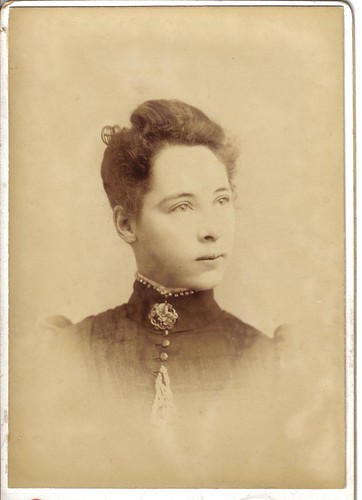
Wedding of Marie Christina Ellenberger and Robert Fisher 1902

Wedding of Marie Christina Ellenberger and Robert Fisher 1902